Friday, 31 January 2014

Friday, January 31, 2014


Friday January 31, 2014 – Genesis 17:15-27

Today’s reading from Genesis tells the story of the covenant made between God and Abraham.  It is really a second telling of this covenant-making, the first having been recorded just two chapters earlier.  In this account, Sarah is identified as the bearer of the promised son.  As well, a symbol, or mark, of the covenant is put in place – the circumcision of all male “sons” of this covenant.

A covenant, in religious terms, is a formal alliance or agreement made between God, and either a segment of humanity, or all humanity.  In this particular covenant, God promises an heir to Abraham and Sarah, who will be the father of a great nation. Land, security, and protection may be understood to be part of  this promise.  If the covenant is broken – by the people – punishment may follow.  God is the constant in these covenants – God does not break a covenant.  We see this most clearly in the story of the flood.  God’s promise to Noah and his offspring is that God will never again destroy every living being.

In spite of Abraham’s disbelief, his laughter at such a promise ever coming to fulfillment, God keeps the covenant, and Abraham’s son, Isaac, becomes the symbol of the people of Israel, God’s chosen.

We, too, are inheritors of God’s promise to love all that God has made.  How do we celebrate that covenant between God and God’s people?

-Rev'd Paul Kett

Thursday, 30 January 2014

Thursday, January 30, 2014


Thursday, January 30, 2014
A Sign of the Covenant:
Genesis 16:15-17;14

This passage is about the beginning of a now ancient Hebrew practice of circumcising all the male children of a house, those born, those purchased, free born and slave: this was to be a sign of a bond between God and the Hebrew people. This was made known to elderly Abram by God, and to signify this, Abram became known as Abraham .

Today, this practice for many of us may well seem to be foreign, paternalistic, and a far cry from the nature of the relationship you and I may have spiritually with a loving, caring God, One from whom we draw our strength, our inspiration and a sense of wholeness. And if perchance you are a seeker , the good news is that in Jesus, we can find that sense of wholeness which makes no demands on whether we are circumsized or not, or what gender we may be, Circumcision may well have been an important practice for some of God's people in ancient times , and is still for some, but it is not a necessary outward sign. If we can look around and find common ground with our brothers and sisters whoever they be , of whatever faith tradition or even not , and, if there be a spirit of good will and an acknowledgement that God by whatever name, sustains and upholds us in love to love one another and the cosmos of which we are part of, then for those of us who find company in and with Christ, we can rejoice and take quiet comfort that the pilgrim paths we travel are sound & good. Good news! 

- Ken Cardwell

Wednesday, 29 January 2014

Wednesday, January 29, 2014


John 5: 19 - 29

I confess that I find listening to talk of final judgement, heaven and hell, who is going where, often very disturbing and difficult.  But, here is good news - it is not up to me to decide!!  This is entirely God’s role - and here Jesus says that God the Father has given Him the authority to grant life and to make judgements.  

I really like Peterson’s translation (The Message): “Neither he nor the Father shuts anyone out.”  

I am reminded too of how I have seen Jesus act.  When a woman was brought to him for judgement (stoning?), he refused to condemn her; rather, he forgave her and challenged her to go and sin no more.  I am encouraged to know that he says the same to me: “I forgive you.  Do better next time.”  

Looking at the beginning of the passage, I see that Jesus behaves this way because that is how God behaves.  He says he copies what he sees his Father doing.  So, this suggests that God too is not interested in condemning, but in loving, forgiving and challenging, longing for us to grow more like Him. For that I am so thankful, and can only respond with thanks, praise and love.

Blessings

-Ann Kelland

Tuesday, 28 January 2014

Tuesday January 28, 2014

Hebrews 9:1-14


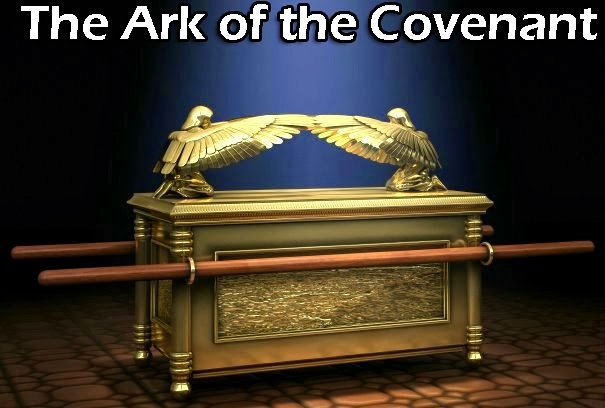
This past Sunday (Jan 26th) at St. John's, the children in the Sunday School made a simple replica of the Ark of the Covenant complete with cherubim.  We talked together about the special items inside the box - a golden urn holding the manna, Aaron's rod, and the tablets with the 10 commandments - items that helped the people of Israel remember that God had been with them and was still present with them.


Then we thought together about what special items help us remember that God is present with us both in our worship space and in our homes.  The first item named by one of the children was the cross.  I think they are on to something!

After the writer to the Hebrews describes the Ark of the Covenant and other items and practices in the sanctuary, the focus turns to Jesus and the cross.  The writer contrasts the earthly sanctuary where the Israelites worshiped God with the heavenly sanctuary where God dwells and which Christ opens for us through his death and resurrection.  Then the writer explains how, through Jesus' sacrifice, we are enabled to worship the living God through prayer and sacrifices of right and just actions.

What items help you to remember God's living presence?  What is your worship-ful response?

- Marilyn Malton

Monday, 27 January 2014

Monday, January 27, 2014


Genesis 14: 1-24

Our reading today, Genesis 14, sketches an ancient war between two coalitions of city-states in the area (now Palestine) where Abram was living.  It is very early, even before Abram’s name was changed to Abraham.  Of all the kings and places listed, only a few mean much to us.  We know about Sodom, which was defeated, and Abram’s nephew Lot, who lived there and was taken captive.  When Abram heard this, he took 318 of his trained men and went and rescued Lot, retrieving his possessions and those of Sodom.  But how can history of an ancient, local war like this be relevant to us millennia later?
From verse 17 the chapter takes a more interesting but mysterious tone.  We meet Melchizedek, whose name means King of Righteousness, who was King of Salem, that is Peace, and who is called “priest of God Most High.”  Melchizedek, with these titles, is even more important than Abram, who honors him with a tenth of everything his men retrieved.  But this great Melchizedek immediately drops out of the biblical account until, much later, he appears momentarily in Psalm 110:4, where God calls the coming Messiah “a priest forever after the order of Melchizedek.”  What is this strange order of priesthood, originating with someone greater than Abraham, hundreds of years before the Levitical priesthood God ordained through Moses?  It’s a mystery!
By the time of Christ, interest in Melchizedek had grown greatly, with many different opinions and much mystery.  Melchizedek appears in early rabbinic writings and is prominent in some of the Dead Sea Scrolls.  In the New Testament, the Book of Hebrews, especially chapter 7, expounds Genesis 14 and Psalm 110:4 at length, showing how Melchizedek prefigures Christ and how Christ is our great high priest, made perfect and living forever, who “is able to save to the uttermost those who draw near to God through him, since he always lives to make intercession for them” (Heb. 7:25).
In later centuries church leaders continue to praise Melchizedek.  Today is the feast day of St. John Chrysostom (c. 347-407), one of the greatest preachers of the church.  Indeed, his name means “golden mouthed”.  Three of Chrysostom’s great homilies (numbers 12, 13, 14) present Melchizedek as a type and forerunner of Christ, expounding Hebrews 7 and 8.  Other church leaders did likewise.  Let us conclude with yet another mystery these leaders proposed:  Genesis 14:18 states that Melchizedek brought bread and wine to share with Abram.  Does this gift prefigure and anticipate our Lord’s consecration of the bread and wine, the mystery of communion and the invitation sometimes given, “The gifts of God for the people of God”?  We cannot know.


History is certainly important in the Bible and in our faith, but mystery is often even more important, for it is in mystery that we experience, but cannot prove, spiritual insight and the glorious celebration of God’s presence with us through the Holy Spirit.  In this age, our knowledge is distorted and incomplete, but in mystery we can anticipate the great and joyous  Day of Christ when it will all be perfected (1 Cor. 13:12).

-Robert Kruse

Sunday, 26 January 2014

Sunday, January 26, 2014


Galatians 2:1-14

Throughout the Pauline letters and the Book of Acts we see Paul having to prove or justify his credentials and his ministry. The theme of authority appears throughout today’s passage.

At the beginning of the passage he mentions a private meeting with the church based in Jerusalem, to discuss his mission. Note that in the account in Acts 15, which could be describing the same meeting, Paul is “appointed” to meet with the Jerusalem church leaders, whereas in this account, he goes of his own will, based on a revelation (whatever that might mean). I’m interested in how Paul, who more often than not comes across as extremely confident, is so forthright about needing confirmation that his ministry had not been in vain (v. 2).

In verse 4 he introduces us to the “false believers,” the “Judaizers” who were claiming that full entry into the church necessitated the observance of Jewish law. In our day are there some groups within denominations, dioceses, or congregations who seem to fixate on one or two issues, while ignoring the Good News that we have in Jesus? Are there some churches that like to project the image of friendliness, hipness, and innovation on the surface, while hiding a core that is self-interested or authoritarian?

Paul writes critically about those who “were supposed to be acknowledged leaders” of the church (v. 6). Do you feel comfortable expressing (hopefully constructive) criticism to your church leaders? Are they tuned in to the conversations happening in the pews or in the parking lot? Are they accessible to you? Or seemingly floating above all of us down here?

Although Paul is critical of the leaders in the church, he does acknowledge the significance of having his ministry to the Gentiles recognized by James, Cephas, and John (v. 9). The Jesus movement began as a community within Judaism, so it is somewhat understandable that some people may have been unsure about the admittance of Gentiles into their group (a BIG change to most of them). James, Peter, and John, though, bless the good work that Paul is doing. Maybe they knew the words of Jesus that we have in Luke 9:50: “for whoever is not against you is for you.” They just instruct Paul to do good for the poor. Can this portion of the text give us guidance on our relations with those church groups or denominations with whom we disagree on certain issues? Do differences on ecclesiology or Biblical interpretation mean that we need to disregard good work they are doing for the Kingdom?

The passage concludes with a story about Peter’s disappointing behaviour at table. Paul caught on to Peter’s unfaithfulness, and set him straight. It is easy to think oneself a saint when living in isolation or going with the flow, living with the privileged majority. It is important, though, to be held accountable by friends whose judgement we trust.

Our image of a pure and spotless early church is quickly wiped out by reading the letters of Paul. There was no shortage of tension. Through prayer, debate, and dialogue, the early Christians did their best. I hope we can do the same.

-Matthew Kieswetter

Saturday, 25 January 2014

Saturday, January 25, 2014


It has been fun and inspiring assembling this great group of contributors for The Week of Prayer for Christian Unity. Today we conclude our week of reflections with a double shot. Our two writers are friends of mine whom I knew at different stages in my life. 

Jared Taylor was one of my best friends in elementary school, through to high school. Over the years we shared a love of many diverse things: David Letterman, Sega, and the sadly underrated band King's X. Asking him to participate in this project was the first time I had communicated with him in several years. It was great to rekindle the friendship. 

I met Micol Cottrell while attending the University of Waterloo in the Religious Studies program. We had many classes together (some of them way over our heads!). We shared countless meals together: at Mel's Diner, UW's Ground Zero (which was always supposedly struggling, yet always full), and Philthy McNasty's after 19th century theology. It is great to see him flourishing in his ministry.

-Matthew Kieswetter

+++

Sirach 39:1-10

The moment came that I knew was going to be powerful.  The Communion liturgy began.  I sat down on the long grass that was more used to horse racing than worship.   As we joined in the words printed in the order of service I looked around at the over 12 000 people sitting in circles of six to ten people.  It was awe inspiring to be part of such a large worshiping congregation.  Then I looked around at the people in my group: my wife, a friend and her child, and three strangers.   There was the wonderful intimacy communion can often foster.  In our circles we broke bread, poured wine and juice, and shared in this ancient meal.  Words from different traditions and in different accents were spoken.  Young and elder and people of different denominations joined together in a deeply sacred moment.

This past summer I went on a pilgrimage to the Greenbelt festival in England. It’s worth looking up:  http://www.greenbelt.org.uk/  Greenbelt is a 40-year old annual arts, faith, and justice Christian festival.   It attracts over 20 000 participants, involves over 1 500 volunteers, and hundreds of presenters.   At the festival there are dozens of events happening at any one time from early morning into the late evening.  Musicians are playing, speakers are talking about theology, social justice, church policies, interfaith dialogue, different style of worship are happening, and so much more.   The festival attracts people of all ages, from a wide range of denominations and those without denominations or churches.  At one point during a multi-sensory High Anglican Eucharist service mixed with rock music my wife pointed out a middle aged nun in full habit bouncing around as she sang an Aerosmith song beside a teenager with green spiked hair.  The festival draws together a wide range of people each delving into their faith, searching, exploring, and sharing community with one another.  

It was the openness, searching, and sharing that has really stuck with me.  What makes Greenbelt possible is people sharing where their passion and their chasing the Spirit is leading them.  For some it was in doing social justice, others it was being musicians, others it was creating post-modern forms of worship.  There was an explorer’s edge to the festival that drew people together.

That sense of exploring and chasing passion and the Spirit is what is at root in today’s reading from Sirach.  The one who devotes herself to the study of the law, we are told, will seek the wisdom of the ancients and the wisdom of prophecies – that’s wisdom past and wisdom present.  He will listen to the wise and the challenging.  She will seek the hidden and obscure.  He will travel in this quest and seek the God who made him.  

Our faith often personifies wisdom as something fluid and vibrant, life-giving and life-altering.  Wisdom is a wild woman yelling out in the market (Prov. 1:20).  The Iona community in Scotland uses the wonderful image of the wild goose to describe the Spirit/Wisdom.  We can grapple with Wisdom like Jacob grappled with God, we can grow in Wisdom, but we can never control Wisdom.  

At the core of Greenbelt was the post-modern faith’s assertion that faith isn’t about getting all the answers right but about journeying with God, chasing passions and the Spirit.  At the festival I was reminded of the powerful experience that happens when we are open to one another, our beliefs, our passions, our expressions of worship and faith.  There were things said in talks that I didn’t agree with, and worship elements that I didn’t find engaging. But I was moved by experiencing and exploring what is meaningful, grace-filled, and holy for other people.  I was invited to be open, to seek Wisdom and the Wild Goose like movement of the Divine.  

That openness to the Spirit, to wild wonderful Wisdom, is what is at heart in the World Week of Prayer for Christian Unity.  When we dare to go beyond our own comforts and traditions, our own beliefs and circles, we can experience the ungraspable Holy Wisdom that refuses to be bound in one place – that Holiness that inspires us, challenges us, and leads us into deeper relationship with God and with one another.   When we come together Holy things happen.  So whether your faith wears a habit or spiky green hair, whether you want to sing Aerosmith and U2 in worship or Amazing Grace may God bless us in the quest of chasing after Wisdom, in being challenged, opened, inspired, and led by the Divine. May God draw us together to share and grow because God is in the journey and the relationship.  

God bless,
Rev. Micol Cottrell

Micol Cottrell is minister of Allenford and Park Head United Churcheshttp://www.greenbelt.org.uk/

+++


John 4:27-42

The Woman at the Well: the Sequel (John 4:27-42)


So who’s in and who’s out? That’s the important question, isn’t it? If I’m the one who has everything right, how much deviation from my own beliefs and practices do I tolerate before I write people off as destined for eternal destruction?

Of course, I’m referring about the attitude of Jesus’ disciples, not my own. (right?)

The Woman at the Well: Part I is a very personal encounter between Jesus and a Samaritan woman. From the Jewish perspective, the Samaritans were way off base. They were a deviation from Israel that went back more than a thousand years. They had intermarried. They had worshipped foreign idols. Their scriptures were incorrect. They worshipped on Mt. Gerizim instead of Mt. Zion. Generations of ingrained ethnic and religious hatred is summarized in one understated sentence fragment: “for Jews do not associate with Samaritans.” (v.9)

In Part II – today’s reading – the woman returns to her town and tells of her encounter with Jesus. Her message, found in verse 29, is simple but telling, 

“Come, see a man who corrected my improper theology and religious practice. We should behave more like the Jews in order to find God’s favour.” 

Okay, that wasn’t her message. (Although - interesting side note - Jesus does speak of theology and side with the Jews on the issue of the origin of salvation.) But here’s the real message she takes with her:

“Come, see a man who told me everything I ever did. Could this be the Messiah?”

The woman’s message is personal and it inspires action (“Come!). Both are points worth exploring. But what should stand out most is that the message is about Jesus. We can go one step further in this case and say the message IS Jesus. Literally. In the flesh. Come meet Jesus!

You cheated on your husband? Jesus.
Your scriptures are wrong? Jesus.
You worship the wrong way? Jesus.
You hate your ethnic enemy? Jesus.

The only starting point for any of these discussions is Jesus.

As usual, Jesus disciples’ are in for a lesson. They were “surprised” when they saw Jesus talking to a Samaritan woman. No doubt, her gender and ethnicity generated equal offense. But Jesus, being Jesus, has a profound message for them: 

“’My food,’ said Jesus, ‘is to do the work of the one who sent me and to finish his work … open your eyes and look at the fields! They are ripe for harvest.’” (v. 34-35)

Wait – “finish the work of the one who sent me”? Are we talking about the Samaritans here? God can’t have been at work among the Samaritans. They worship on the wrong mountain! Their scriptures are wrong! God loves us, we hate them, therefore God must hate them too! If any field is “ripe for the harvest” it’s the Jews, not the Samaritans.

But our story doesn’t leave even a moment for the disciples utter a reaction because, sure enough, Samaritans coming back to the well in numbers to meet Jesus and bring him back to their town. “And because of his words many more became believers.” (v. 41) 

Jesus’ reaping and sowing pep talk was both an immediate prediction about the Samaritans, and a grand revelation about God’s work and plan. This gospel, so powerful it would soon spread around the planet, took a short test drive to the next town over. And Jesus’ own disciples were surprised.

Where would it surprise me to find out God has been at work? Who is the most unlikely group of people? The surprising message of the gospel is that God has already been at work there.

Compared to any other religion or people group, Samaritans were the closest to Jews in belief, practice, even geography. This story should remind us that we have a fallen tendency to hold the most enmity for people who are the most like us. It’s fun to debate the differences between Roman Catholic and Orthodox, charismatic and cessationist, Calivinist and Arminian, Baptist and Anabaptist; but may we never forget that, no matter how big the issue, the only starting point for any of our discussions is Jesus.

-Jared Taylor

Jared Taylor is the Pastor who looks after weekend services at The Meeting House, a Brethren in Christ church with locations around Ontario. He also blogs about church music and production at Amplify.